
The Secret World of Truffle Hunters: Traditional Foraging in Ancient Forests
Deep beneath the mist-shrouded canopies of primeval oak groves, an ancient and secretive pursuit unfolds every autumn. Truffle hunting is not merely an agricultural operation; it is an ancestral craft woven with folklore, intimate ecological understanding, and generational secrecy. Wild truffles grow entirely hidden subterranean, nestled several inches beneath the forest duff beside symbiotic root systems. Because they show no stems, caps, or leaves above the dirt, discovering these buried gastronomic fortunes requires an exceptional partnership between human intuition and non-human sensory excellence.
From Swine to Canines: The Evolution of Truffle Detection
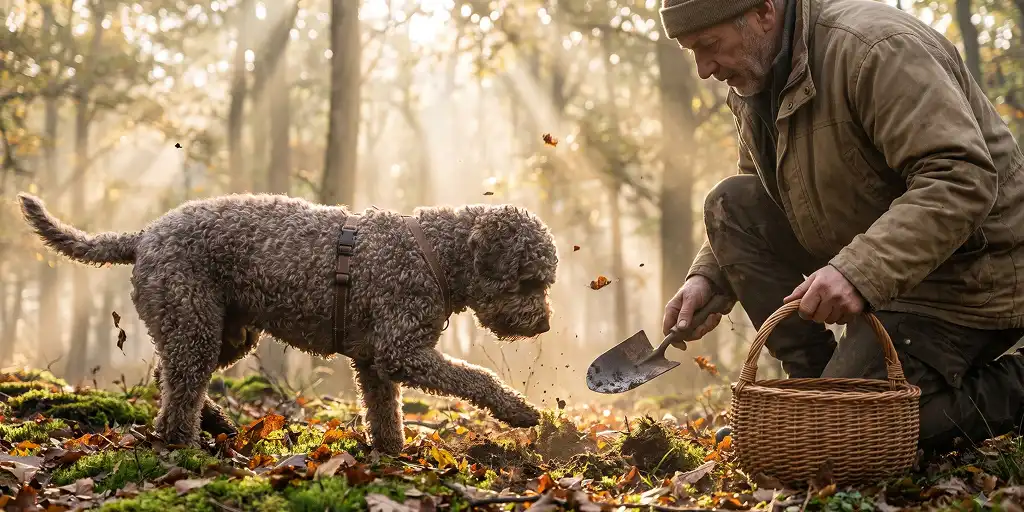
Historically, wild truffle gatherers relied primarily on female pigs to identify mature subterranean specimens. Sows possess an innate, instinctual attraction to truffles because the fungi naturally synthesize androstenol, a hormonal compound strongly resembling male boar pheromones. However, handling pigs in wild rough terrain presented monumental difficulties; their voracious appetites frequently led to swallowed treasures and severely damaged delicate tree root structures. In modern times, hunting methodology has transitioned exclusively toward meticulously conditioned canines, which locate the scent with precision and sit patiently without consuming the prize.
The Symphony of Scent: Training and Root Ecology
A master truffle dog requires months of focused sensory calibration beginning from early puppyhood. Trainers apply authentic truffle oil to nursing gear, eventually graduating to burying fabric infused with ripe truffle aroma beneath garden soil. In the forest, the canine ignores distractions like wild game scents, locking exclusively onto the volatile sulfurous bouquet emitted by fully ripe fungi. An experienced forager reads every twitch of the dog’s tail, recognizing the exact posture that indicates an underground strike before stepping forward with a traditional curved digging spade.
Environmental Stewardship and Safeguarding the Forest Mycelium
Ethical harvesting practices are the bedrock of wild truffle sustainability. When an underground node is located, the gatherer gently extracts the tuber using specialized iron spades without slicing through adjacent tree taproots. Crucially, the hunter must replace every crumb of excavated soil, sealing the underground mycelial networks to preserve spores and maintain ideal moisture for future seasons. Uncontrolled raking or mechanical tilling destroys fragile forest ecologies, turning fertile truffle valleys barren for decades; true artisans protect the earth with utmost reverence.