
Black vs. White Truffles: Decoding the Kings of Subterranean Luxury
In the competitive universe of international haute cuisine, the debate between black and white truffles continues to intrigue diners and seasoned culinarians alike. While both belong to the esteemed genus Tuber and develop underneath woodland soil, they possess completely distinct chemical profiles, biological requirements, and culinary functions. Confusing one for the other within a menu execution can lead to tragic culinary miscalculations. Discerning food enthusiasts understand that choosing between these rare treasures goes far beyond exterior pigment; it dictates the entire architectural construct of a dish from heat management to finishing textures.
Structural Anatomy, Fragrance Compounds, and Taste Profiles
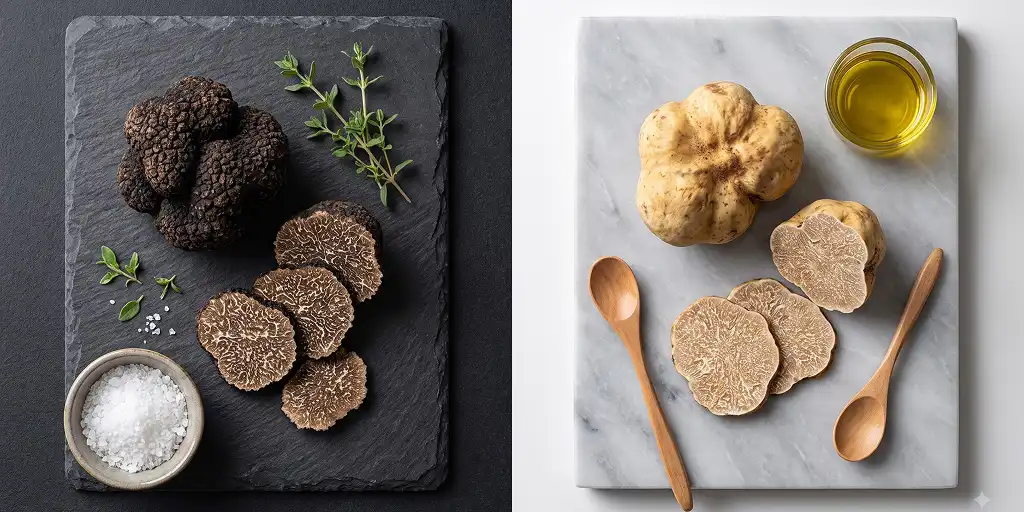
The exterior of a mature black truffle is shielded by a hard, pyramidal, multifaceted armor that encases deeply marbled flesh with dark mahogany tones. Its aromatic presence develops steadily, offering nuanced layers of moist loamy earth, toasted hazelnuts, forest undergrowth, and raw cacao. Conversely, the legendary white truffle possesses a smooth, velvety outer skin resembling golden marble. Its interior remains creamy, releasing an intense, immediate explosion of pungent wild alliums, fermented cream, and sweet autumn flora. The white truffle strikes the palate with raw immediacy, while the black variety lingers with complex, warming resonance.
Heat Resilience: The Fundamental Rules of Kitchen Application
The golden operational dividing line between these fungal dynamos lies directly in their tolerance toward cooking fires. Black truffles contain resilient flavor compounds that actually harmonize with gentle sustained heat; simmered within reduction sauces, nestled under poultry skin prior to roasting, or gently incorporated into warm clarified fats, their aromatic qualities permeate the dish gracefully. White truffles, by stark contrast, are thoroughly ruined by heat. Cooking destroys their volatile chemical aromatic matrix within seconds. As an unbreakable rule, white truffles must solely be shaved uncooked onto hot finished foods right at the dining table.
Seasonal Calendar and Economic Valuation
Availability rhythms further define their prestige across international luxury commodity markets. White truffles emerge strictly during brief autumn and winter periods, defying any reliable agricultural cultivation and commanding extraordinary price premiums at international auctions. Black truffles, spanning winter melanosporum and lighter summer aestivum varieties, boast a broader harvesting calendar and slightly higher harvest consistency. Choosing between them depends on the culinary canvas: rely on black truffles for deep foundational savoriness, and reserve white truffles for theatrical, sensory finishing gestures.