
The Science of Preserving Fresh Wild Truffles: Maximize Aroma and Longevity
Fresh wild truffles are among the most perishable luxury ingredients in global gastronomy. From the precise second they are carefully exhumed from woodland soil, an inevitable biological race against time begins. Truffles lose moisture continuously through cellular respiration, which simultaneously disperses their volatile aromatic molecules. When handled without standard care, a prime specimen can forfeit over thirty percent of its signature perfume and structural firmness within forty-eight hours. Understanding the biochemical nature of these subterranean fungi is essential for chefs, boutique caterers, and private connoisseurs seeking to maximize their culinary investments.
Step-by-Step Refrigeration Protocol for Optimal Potency
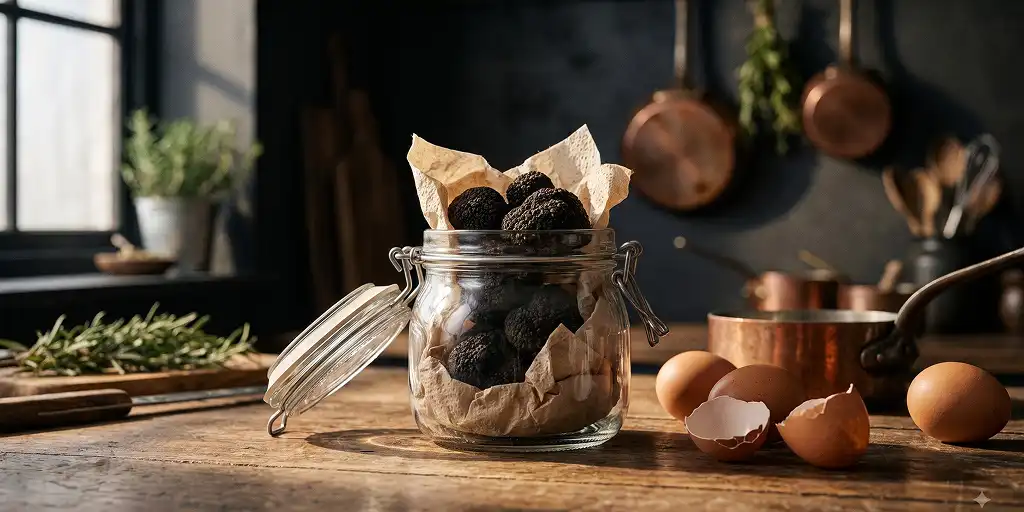
The primary enemy of an unconsumed truffle is excess condensation combined with stale ambient air. When your shipment arrives, do not wash or peel the outer cuticle. Instead, gently envelop each individual tuber in clean, unbleached culinary paper towels. Place the wrapped specimens inside a heavy-duty airtight glass jar or an airtight ceramic keeper. Store this container within the coldest zone of your commercial refrigerator, strictly calibrated between two and four degrees Celsius. Replace the paper wrap daily without exception, as it absorbs transpired moisture and prevents the growth of detrimental white mold colonies.
Unlocking Secondary Aromatics: The Gastronomic Symbiosis Method
Truffles continuously breathe out sulfurous and musky aromatic compounds capable of penetrating permeable food membranes nearby. Discerning kitchen masters exploit this behavior through controlled pairing inside the storage jar. Resting your unwashed fresh truffles adjacent to fresh farm eggs, unsalted cultured butter, or raw Arborio rice allows the surrounding ingredients to naturally absorb the decadent aroma. After forty-eight hours, the egg yolks and butter become thoroughly infused with deep forest essence, providing sensational culinary foundations for morning scrambles and creamy risottos before the primary truffle itself is even sliced.
Common Pitfalls to Avoid in the Truffle Pantry
A frequent catastrophe among inexperienced cooks is attempting to freeze whole fresh truffles inside ordinary home freezers. Standard freezing damages cell walls through rapid ice crystal expansion, reducing a prized specimen into an unpleasant rubbery sponge once thawed. Similarly, storing truffles inside plastic zipper bags traps moisture against the skin, promoting swift rot. Finally, never submerge fresh pieces in water until the final seconds before table service; brush them clean dry, and treat each specimen like an irreplaceable living gem.